

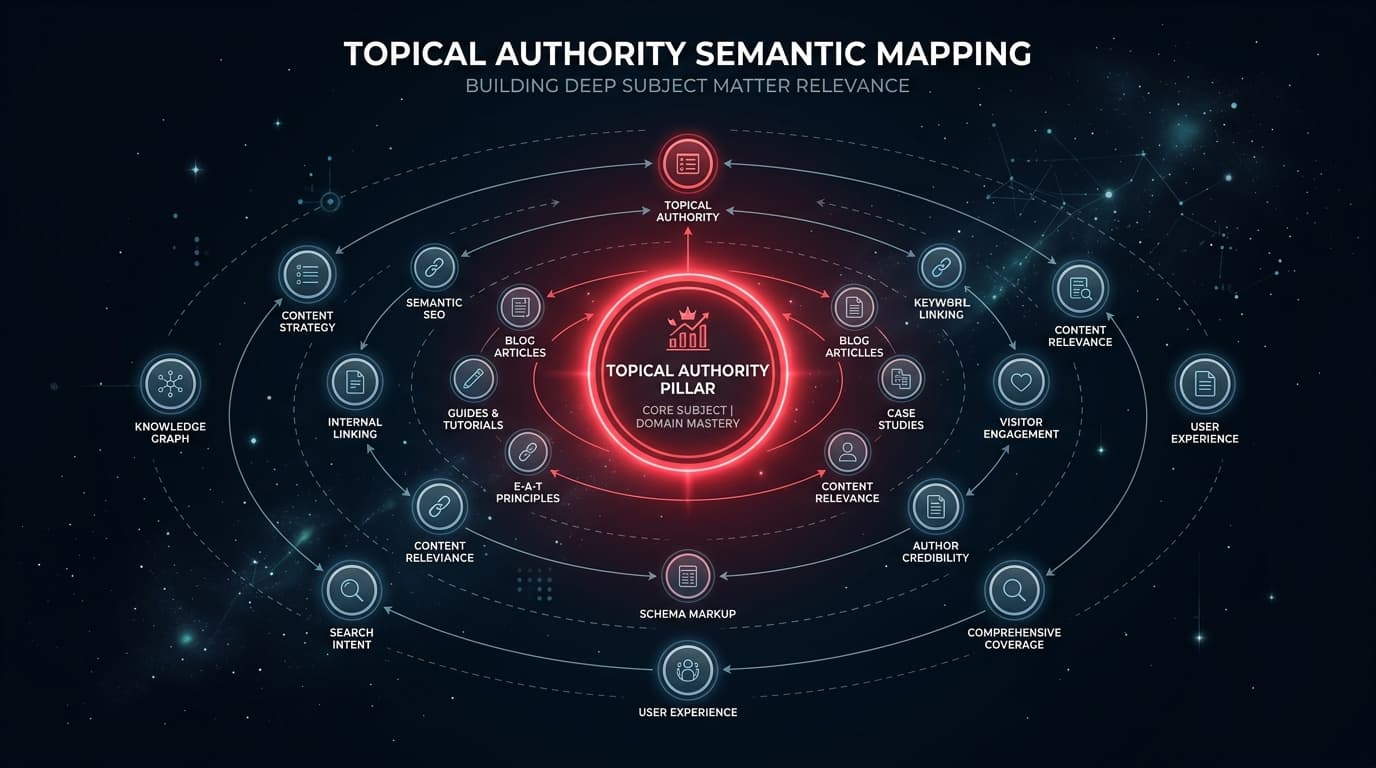
Google's core ranking systems have transitioned away from raw backlink counting. In 2026, core algorithm updates rely heavily on **Topical Authority** models. Google's systems use semantic clustering to evaluate whether a website has complete, expert coverage of a subject area or if it merely hosts disconnected keywords. Domains that rely on thin, unorganized articles are being penalized, while domains that structure content into logical, semantic maps are winning the majority of organic search visibility.
This shift has massive implications for SEO strategy. You can no longer expect to rank a page for a competitive keyword by simply writing a single high-quality post. Instead, you must build a comprehensive topical cluster—a network of parent and child pages that cover every related subtopic, linked together by structured internal pathways. This technical guide outlines the exact models and setups required to build impenetrable topical authority in the AI era.
Understanding Topical Authority Models
Topical authority is Google's representation of your website's expertise. The algorithm assigns domain scores based on content depth, semantic links, and historical search impressions. The core update algorithms evaluate this using three primary metrics:
- Clustering Density: The number of verified nodes (supporting articles) that relate to a main pillar topic on your site.
- Semantic Link Relevance: How contextually accurate your internal link anchors are in representing the relationships between parent and child pages.
- Topic-specific Backlinks: External authority signals coming from domains that already have verified topical authority in the same vertical. Learn how we scale these relationships in our case study on Xtrodinry Coimbatore.
Topical Cluster Performance Breakdown
The structure of your content clusters determines how search engine indexers navigate your domain. The table below represents the comparative performance of sites using different content architectural designs.
| Content Architecture | Avg. Indexing Speed | Core Update Volatility | AEO Citation Rate |
|---|---|---|---|
| Semantic Hub-and-Spoke | Fast (under 12 hours) | Minimal (low volatility) | High (frequently cited) |
| Flat Page Layout | Moderate (2-5 days) | Medium (moderate shifts) | Medium (occasional citations) |
| Isolated Thin Keywords | Slow (weeks to index) | High (severe traffic drops) | Low (rarely cited) |
Step-by-Step Model to Build Topical Authority
To align your domain with modern indexing systems, follow this three-step content cluster framework:
1. Define Your Pillar Hub
Identify your primary, high-volume transactional topic. This is your "Pillar Hub". For example, if you offer SEO plans, your Hub page should be a comprehensive guide on "SaaS SEO Strategy". This page should link to every related subtopic on your domain, providing search engine crawlers with a central navigation starting point.
2. Map Supporting Content Nodes (Spokes)
Create supporting, informational pages that target specific long-tail queries. If your hub is "SaaS SEO Strategy", your supporting spoke articles could cover keyword research, technical SEO, and link acquisition. Maintain strict logical links between parent and child pages to pass authority scores down the cluster. Learn how to map local clusters in our guide on Ahmedabad SEO targeting.
3. Enforce Bidirectional Internal Linking
Verify that every child spoke article contains a contextual text link pointing back to the parent hub, and that the parent hub contains links returning to the spoke articles. This circular layout distributes authority and ensures search bots can easily index new pages.

Maintaining Authority and Avoiding Algorithmic Penalties
Once you have established authority, you must actively protect it. Core algorithm updates routinely refresh quality filters. Conduct quarterly content audits to prune low-performing or outdated spoke pages, consolidate competing articles that cause keyword cannibalization, and check server response metrics.
Not sure how Google evaluates your site's topical authority? Request a Free SEO Audit. We will crawl your domain and build a custom cluster visualization showing your optimization opportunities.
Topical Authority FAQ
Q1: What is topical authority in SEO?
Topical authority is a ranking system metric that measures a website's depth of expertise in a specific subject area. Google evaluates this by analyzing your content depth, semantic clustering, and contextual backlinks.
Q2: How many supporting pages are needed to build authority?
There is no fixed number, as it depends on competitor depth. However, standard competitive niches require a minimum of 8-15 highly structured, interconnecting spoke articles to successfully establish authority scores for a main pillar page.
Q3: Does duplicate content hurt topical authority?
Yes. If multiple pages on your site target the same search intent (keyword cannibalization), search engines will struggle to identify which page is the authority, diluting your overall ranking potential.
Build Impenetrable Topical Authority
We map semantic clusters, audit content gaps, and execute contextual internal linking to secure your domain's organic ranking.
Build My Authority Map